Case 1:Five Minutes
An AI Generated Video
Title: Five Minutes
Medium: AI-Generated Video
Running Time: 55 seconds
AI Generation Tools: OpenArt, Runway, ChatGPT
Editing Software: Final Cut Pro
Role: story development; writing shot-by-shot descriptions; shot design; prompt writing and iteration; curating generated clips and editing.
Story:
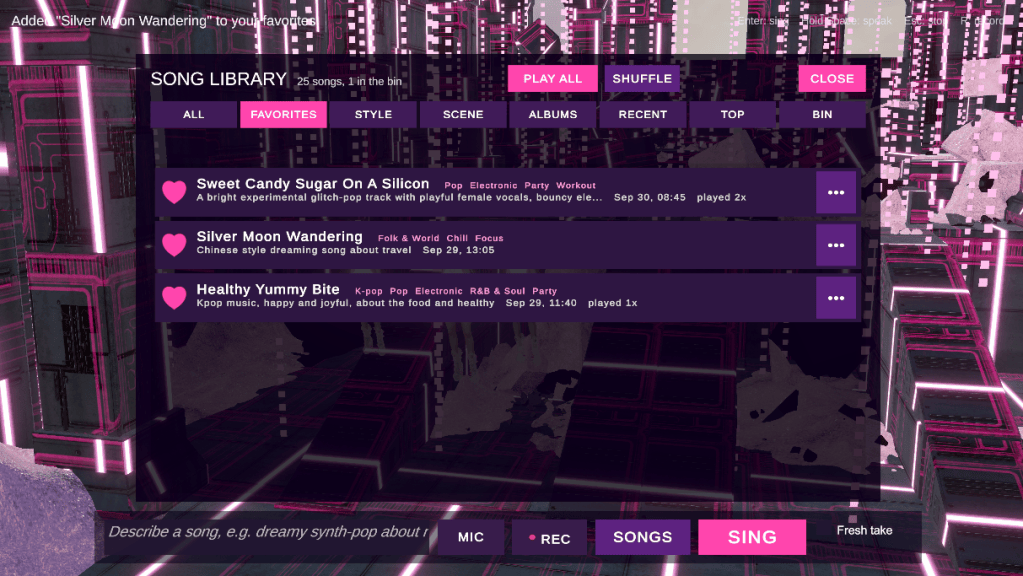
After closing time, the museum sank into silence. A cleaner walked toward the pink bench at the center of the gallery and was about to carry it away when a security guard stepped out from the depths of the hall and stopped her. “That bench can’t leave.” She didn’t argue. She said only one thing: “I just need five minutes.” The guard looked at her for a moment, said nothing more, and helped her carry the bench into the staff break room.
Only after he had gone did she sit down. She pushed up her left sleeve, baring the inside of her forearm, where a line of pink fluorescent digits glowed softly against her skin: 100%. Then she plugged in the charger and began to charge.
Before long, the door opened and the guard returned. On reflex, she moved to rise, one thought in her mind: Uh-oh. I’ve been caught. But to her surprise, he neither scolded her nor made a fuss. He simply unplugged her charging cable, returned it to the wall, and sat down beside her. On his arm, too, a line of glowing digits flickered faintly: 100%. Neither of them said a word. They just sat there, side by side on the pink bench, in perfect quiet.
Case 2:Shiseido Chengdu Kuanzhai Alley Art Collaboration
Integrated Visual, Digital & Spatial Experience
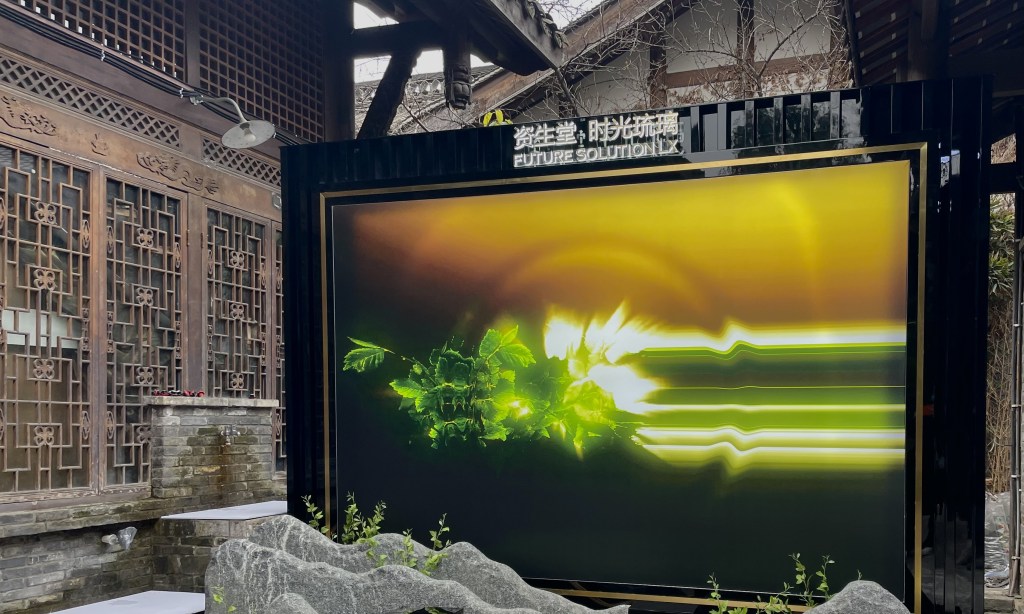
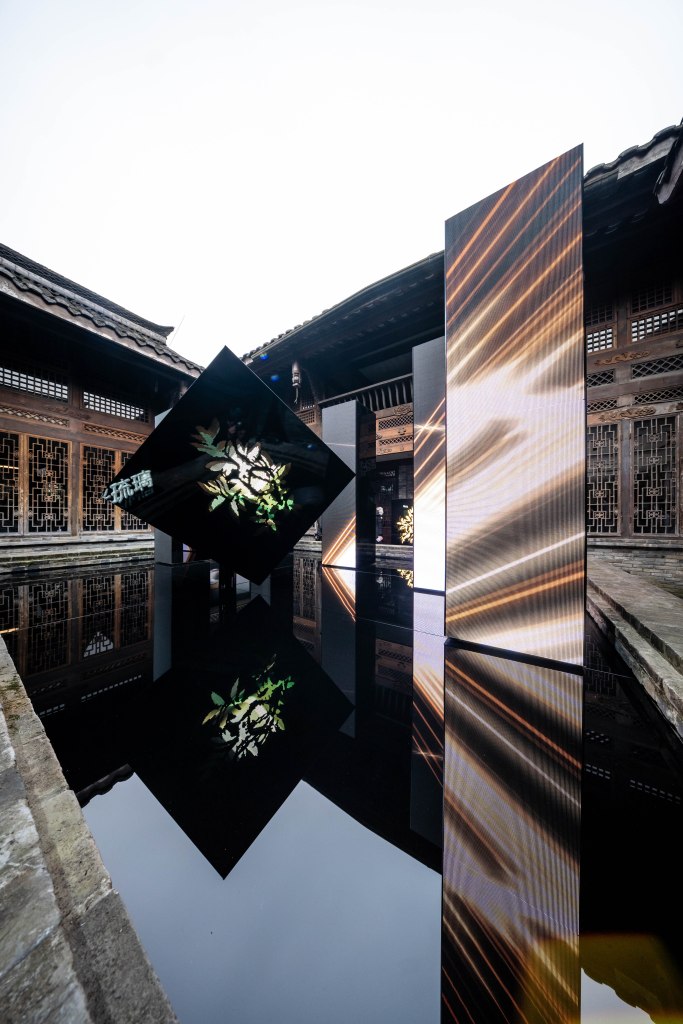
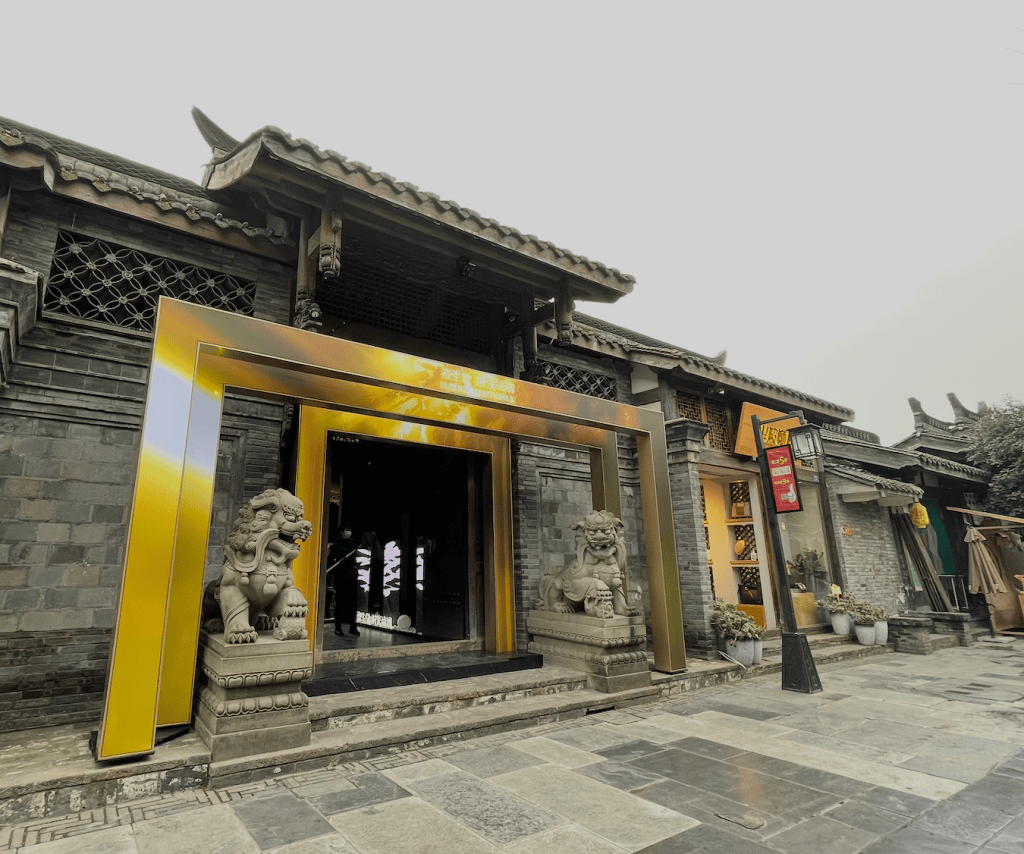
Client: Shiseido
Venue: Chengdu Kuanzhai Alley, China (2022)
Role: Key Visual, digital artwork, spatial installation
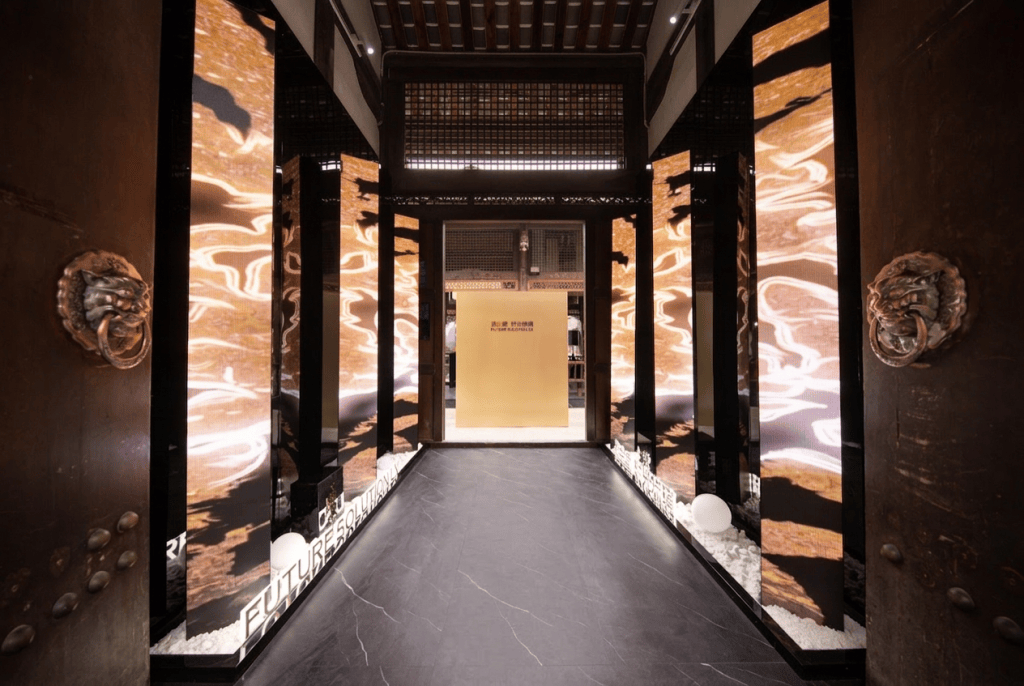
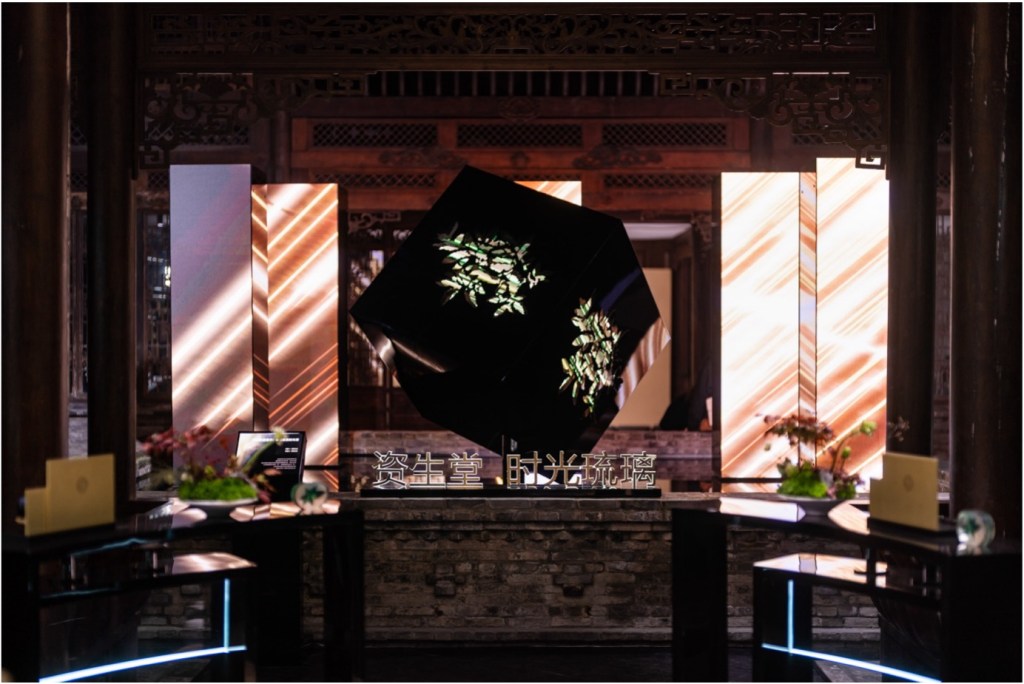
Developed an integrated creative concept for a brand collaboration spanning key visual design, digital artwork, and spatial installation. I translated the project brief into a consistent visual language that could operate across graphic, screen-based, and physical formats.
Case 3:Cyber JiangHu Workshops
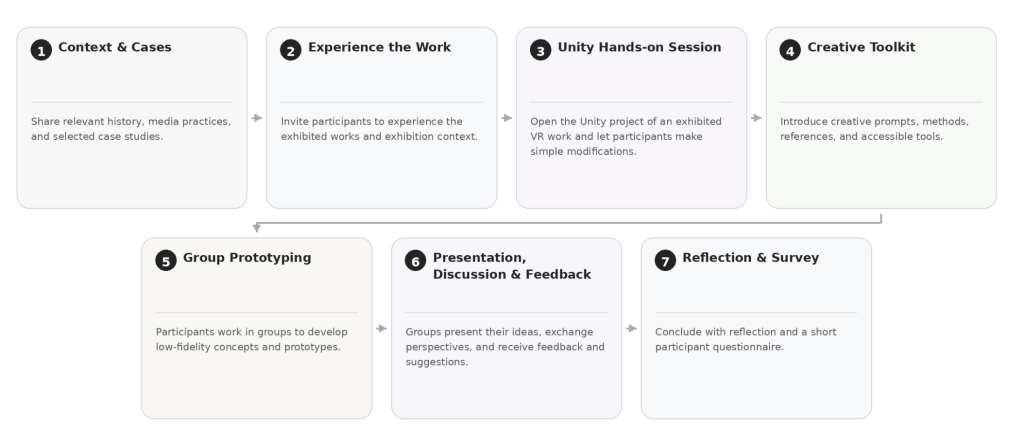
Workshop Flow & Reusable Methods
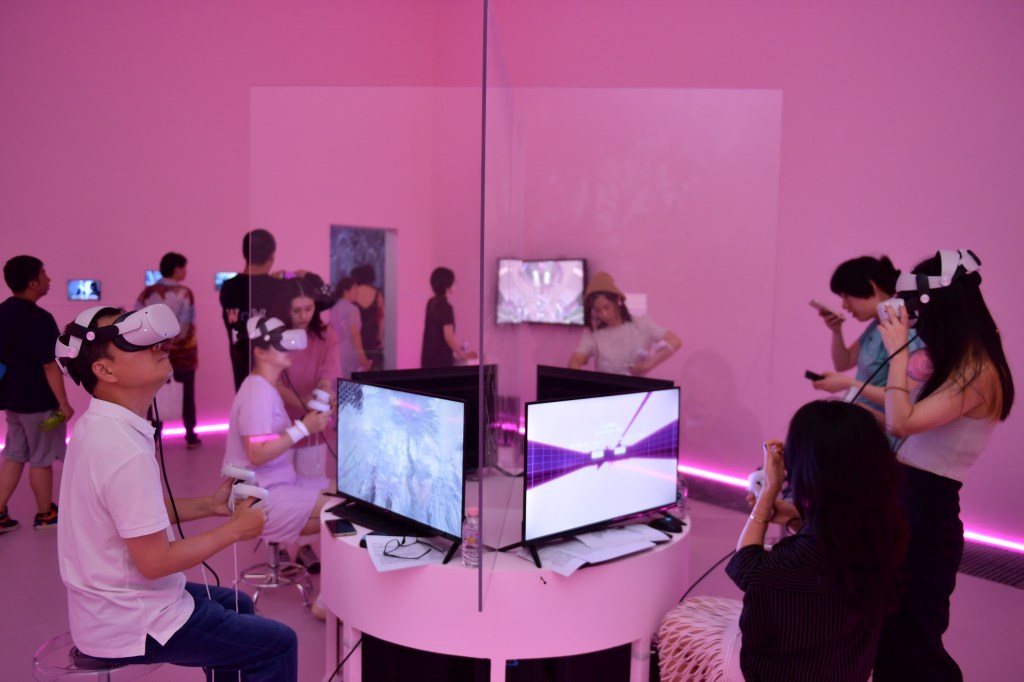
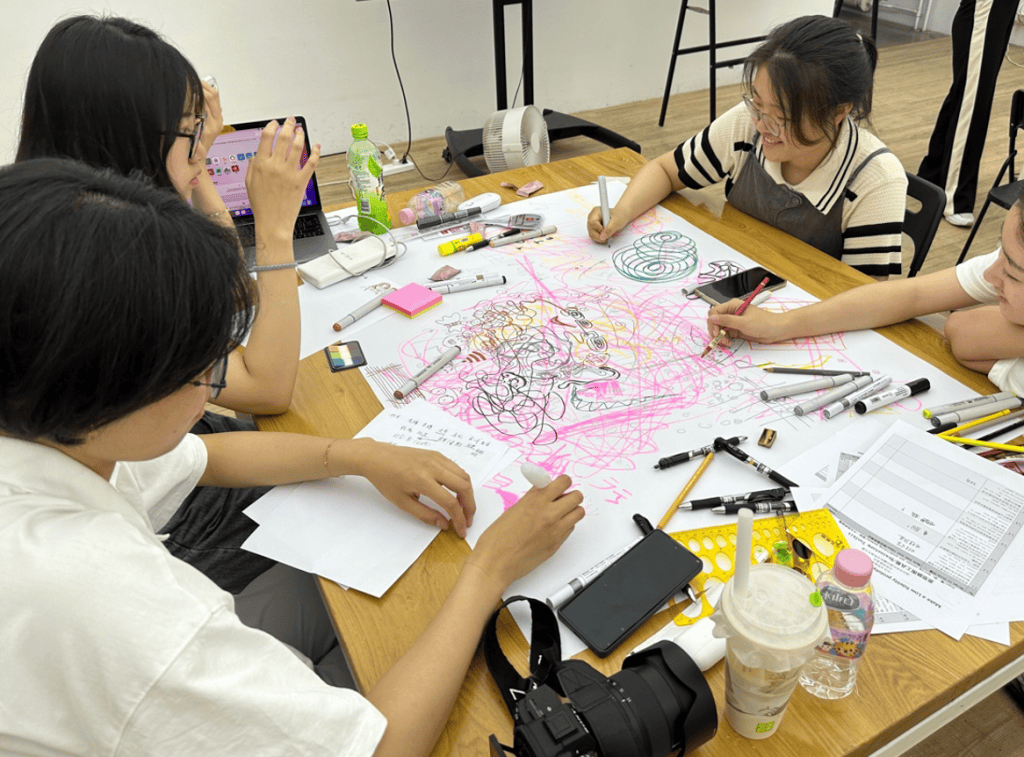
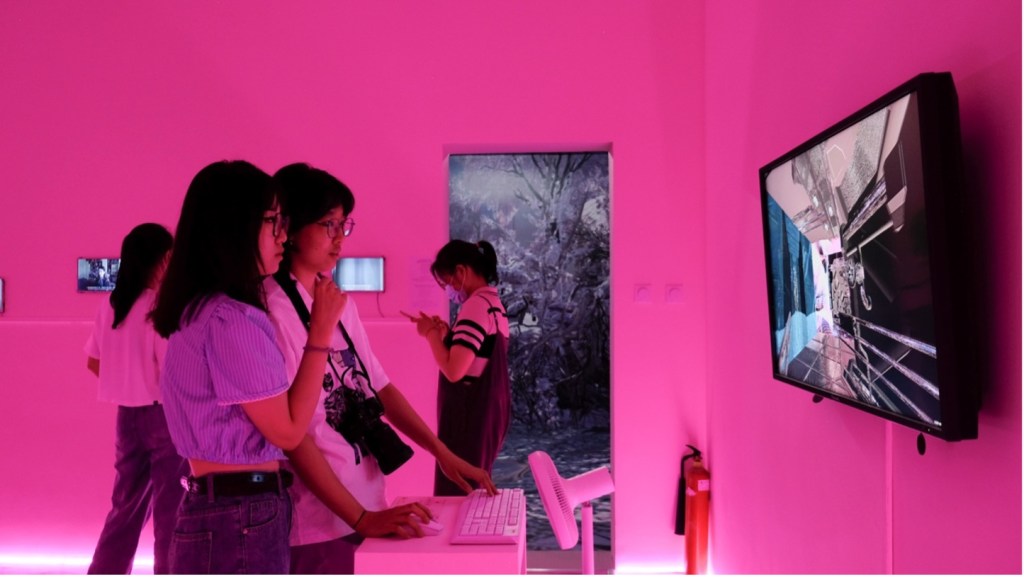
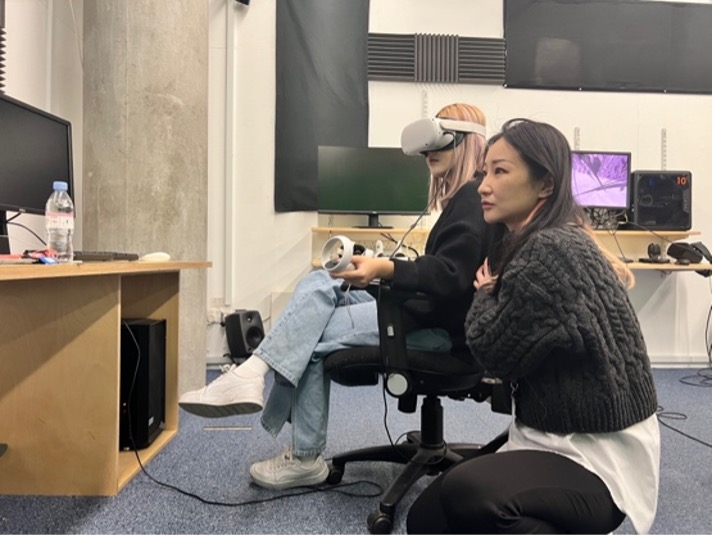
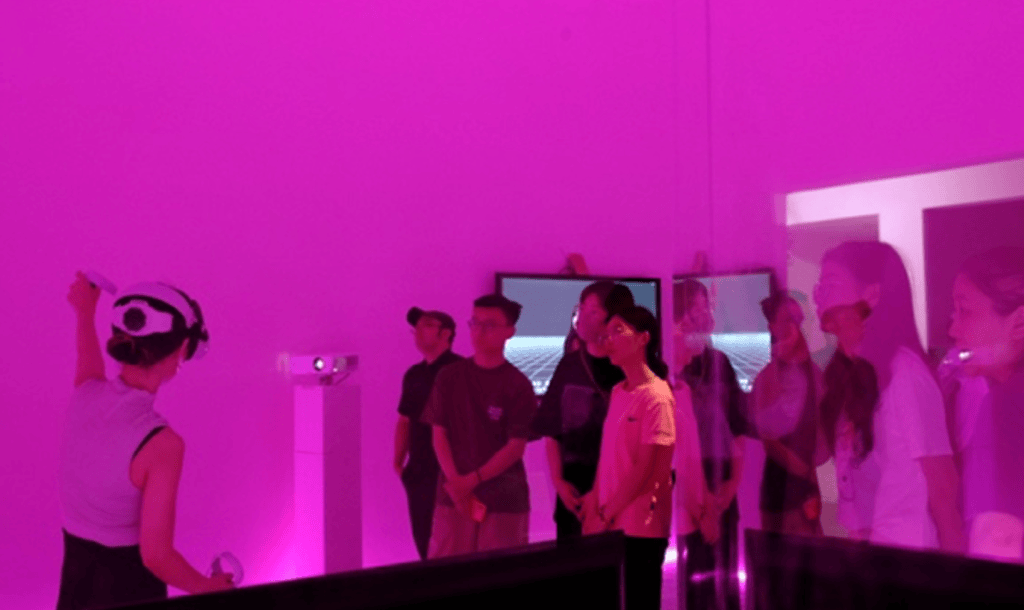
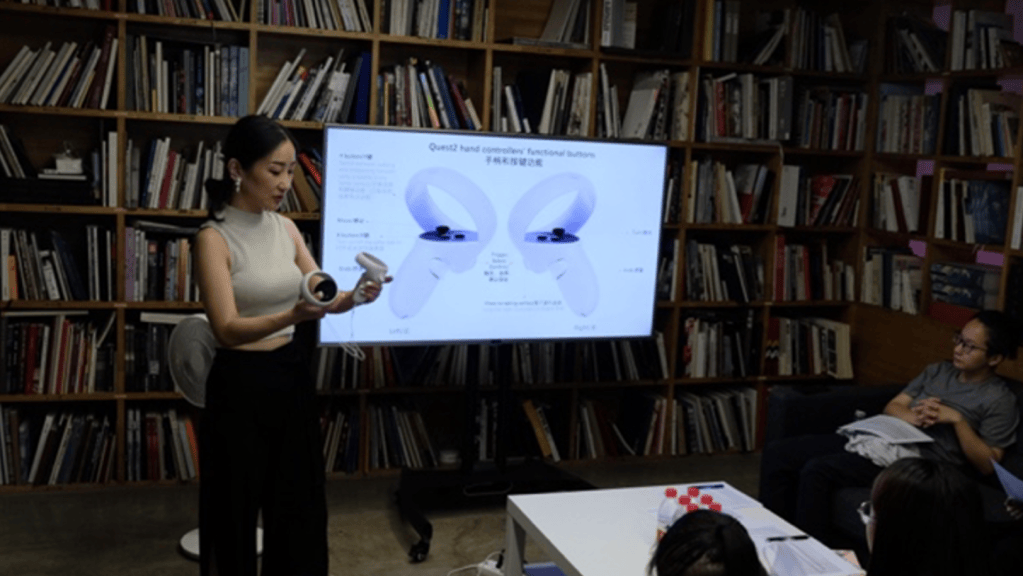
Designed and led art and technology workshops across London, Beijing and Nanjing.
Built a repeatable hands-on learning framework combining media context and case studies, direct experience with interactive works, guided exploration of a simplified Unity project, and a structured creative toolkit covering audience, narrative, interaction, interface, and tool selection. Guided participants from early concepts to low-fidelity interactive prototypes through group presentations, discussion, feedback, and iteration, and concluded the workshop with a participant survey to gather reflections and responses.
Case 4:Creative Machine Tour Exhibition in China
AI Art Exhibition Consulting & Technical Translation
Role: Exhibition Consultant (2023-2025)
Institutions: Taikang Art Museum(China) × Creative Machine(UK)
As Exhibition Consultant, I supported the project from early exhibition development through production and implementation, working between participating institutions, artists, and technical teams.
My responsibilities included translating cultural, creative, and technical concepts across curatorial, marketing, internal and external teams. Built shared understanding around the history of AI/ML, generative technologies, artists’ specific technical approaches, and artwork requirements; consolidated technical and equipment needs, and substitution options, and worked closely with artists and institution teams to deliver the final presentations.
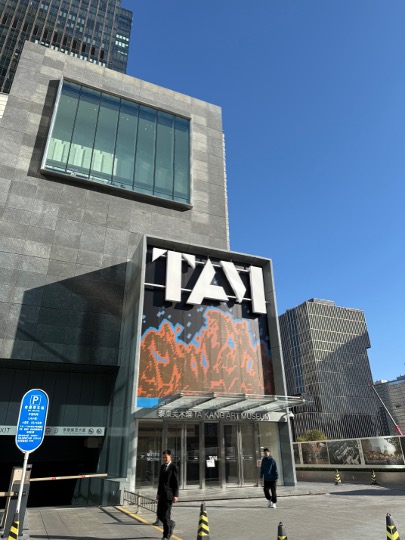
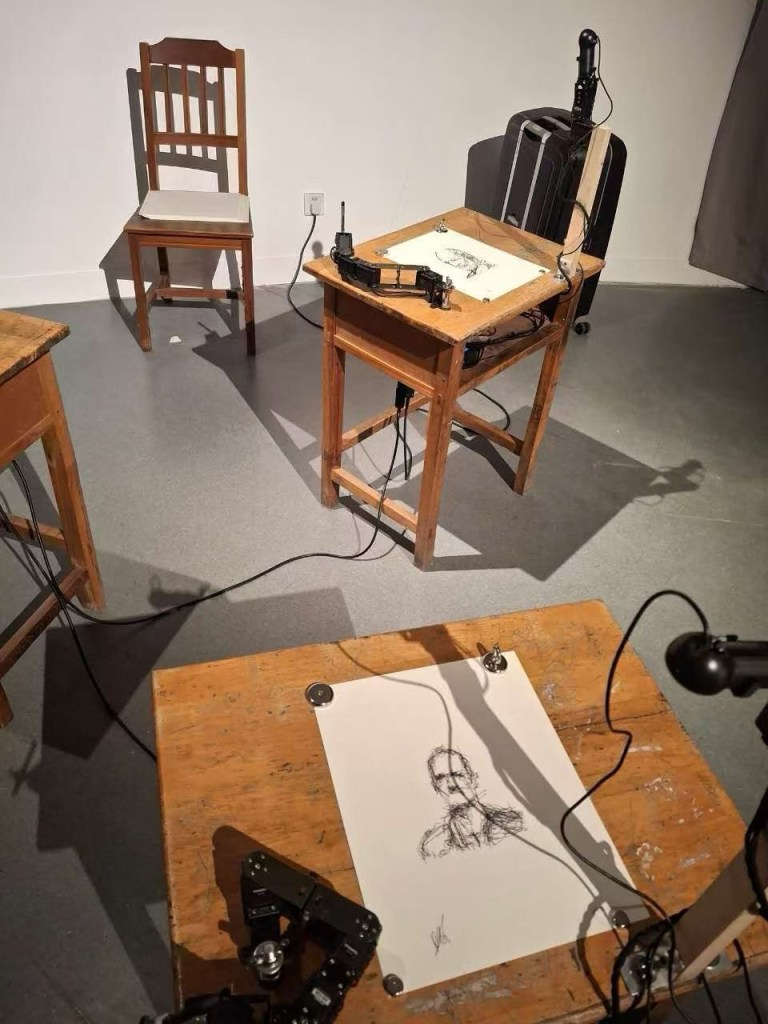
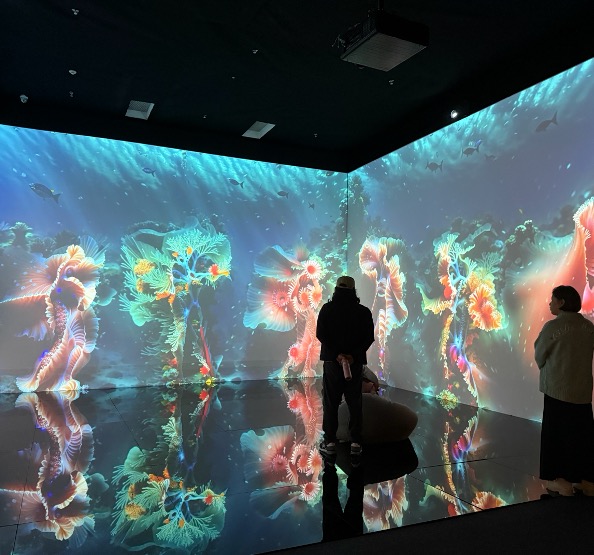
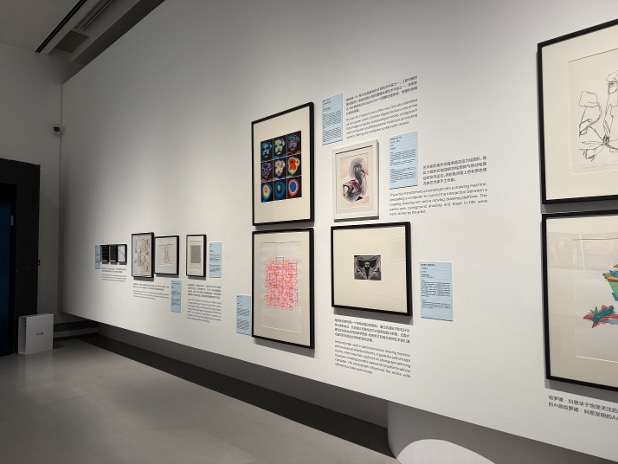
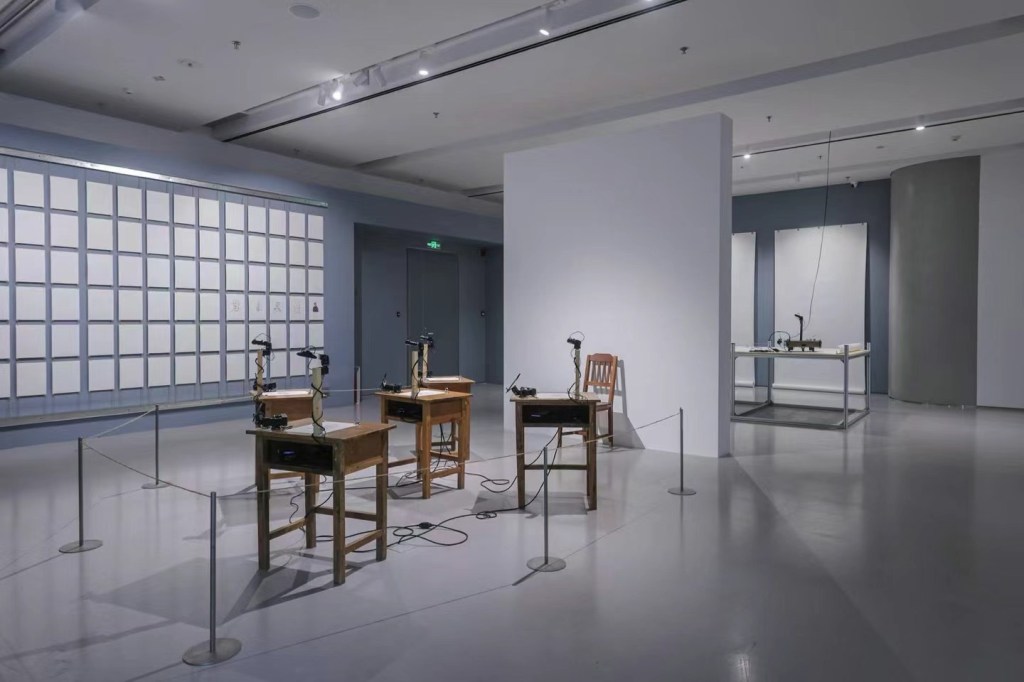
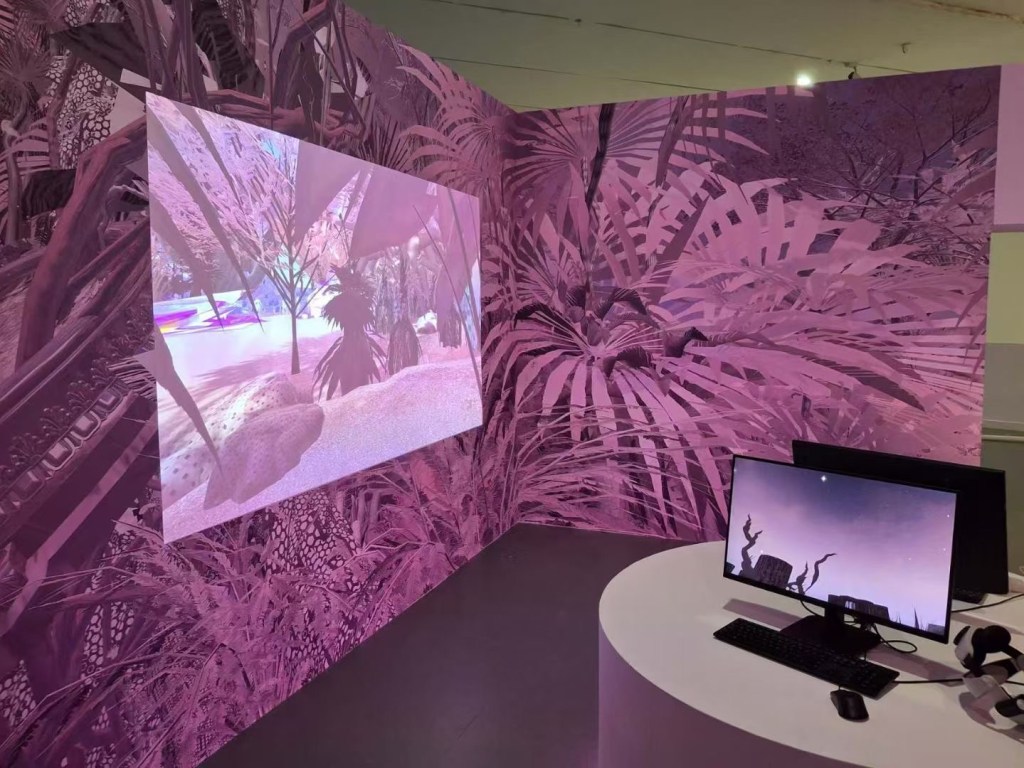
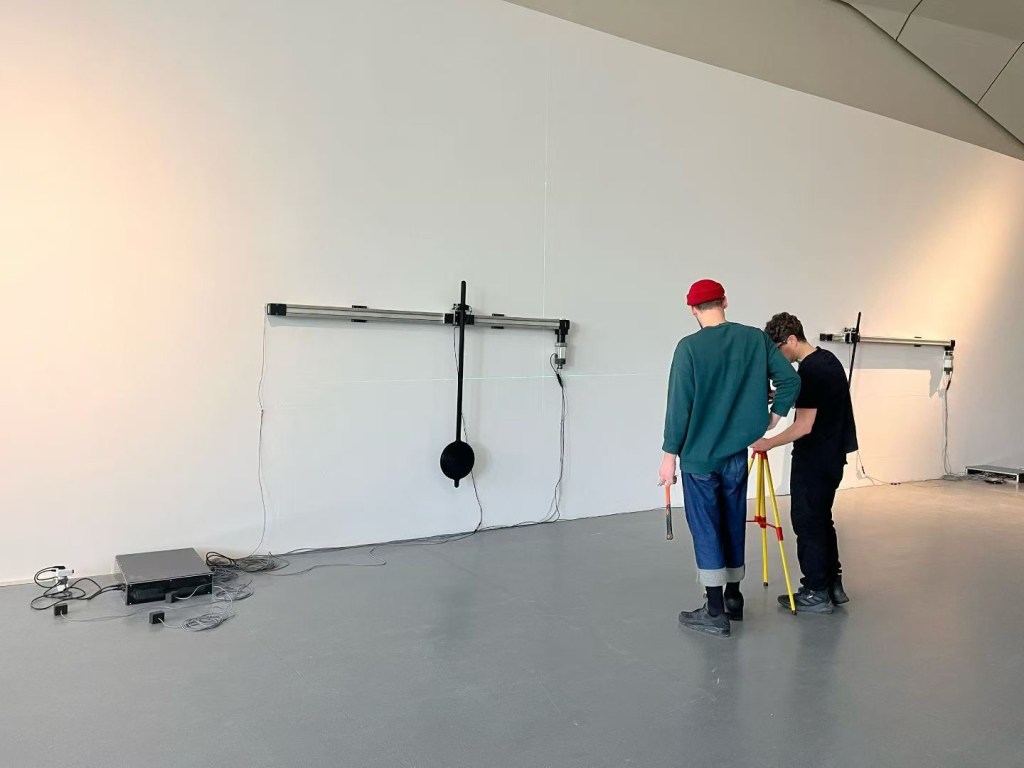
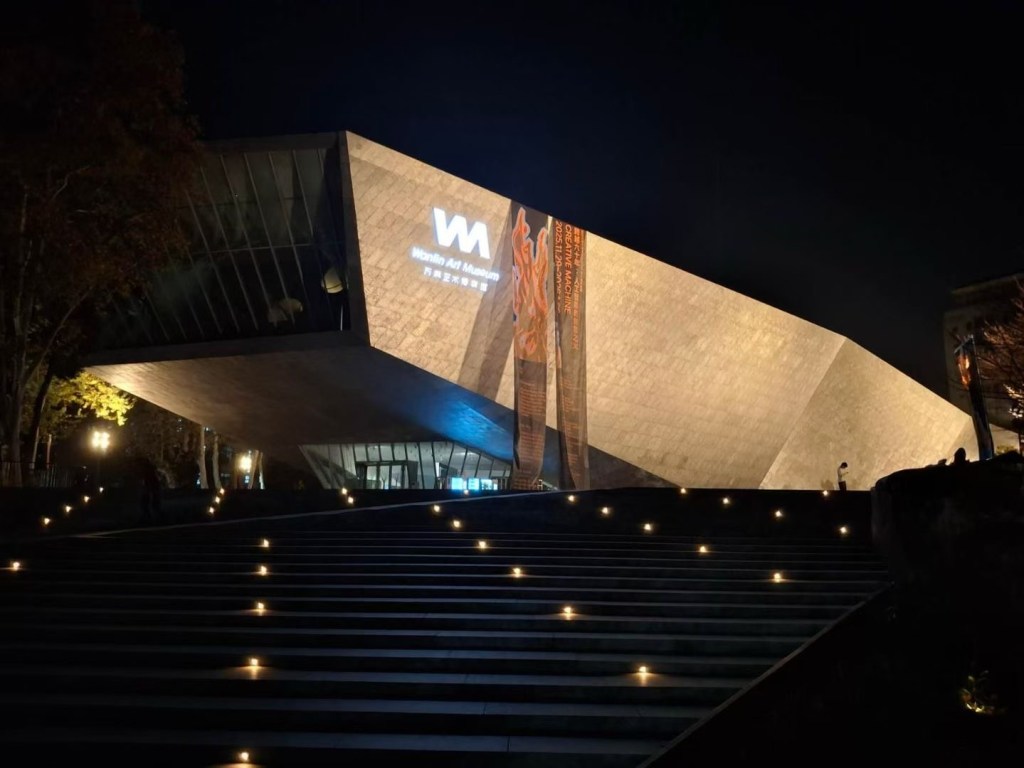
The Creative Machine exhibition was held at the Taikang Art Museum in Beijing from November 15, 2024, to February 28, 2025. The exhibition subsequently toured to the Wanlin Art Museum in Wuhan (December 2025–January 2026).
Case 5:AgentArt Studio
Building an AI-Native Creative Studio
AgentArt Studio
Year: 2025-ongoing
Public operating: 25 Feb 2026–24 Feb 2027
AgentArt Studio began with a question: what would it take for AI to operate not as a single creative tool, but as a self-running creative studio?
I designed and built a multi-agent production system that can research world signals, form creative directions, generate and evaluate visual work, create public-facing narratives, and prepare releases through a repeatable workflow.
My role spanned creative direction, workflow design, AI-assisted coding, prototyping, and implementation. I defined the system architecture and creative logic while using AI coding tools to accelerate development and debugging across Python, Processing, automation, and agent orchestration.
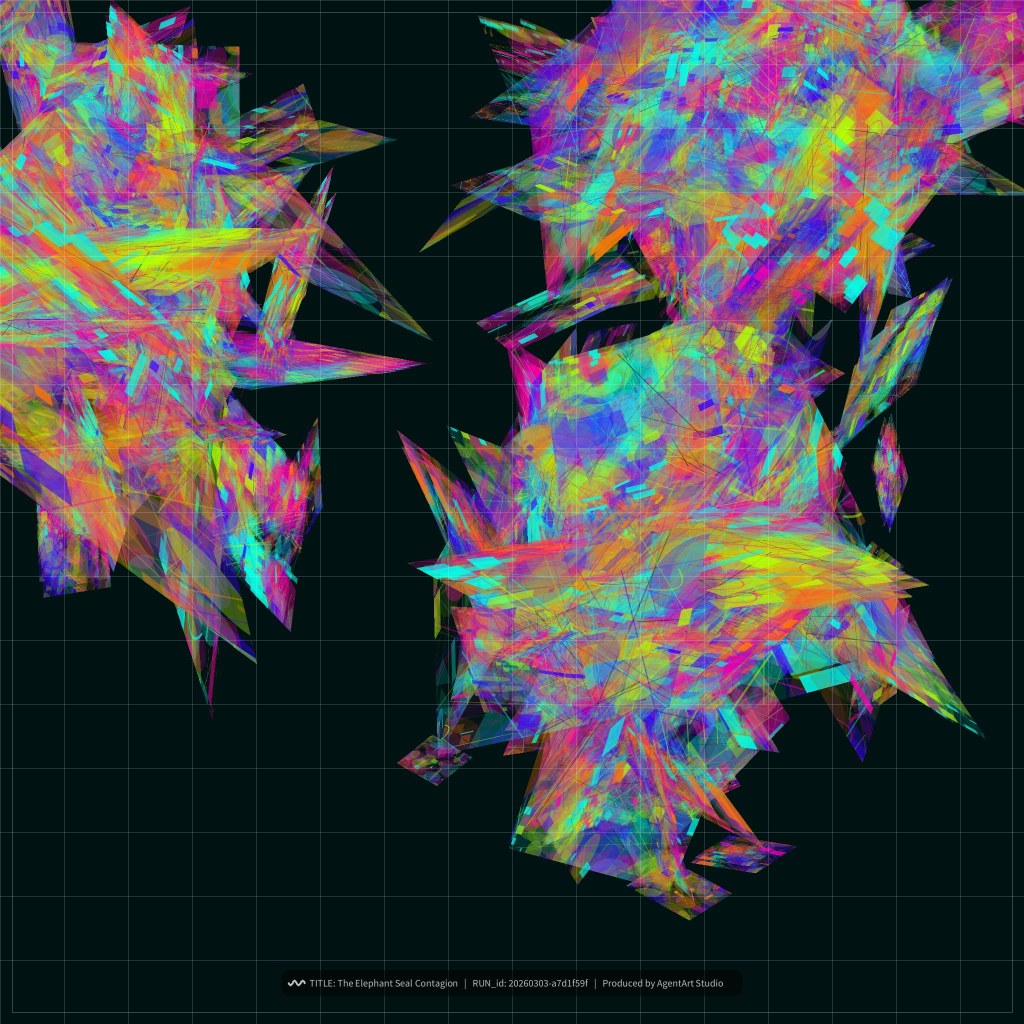
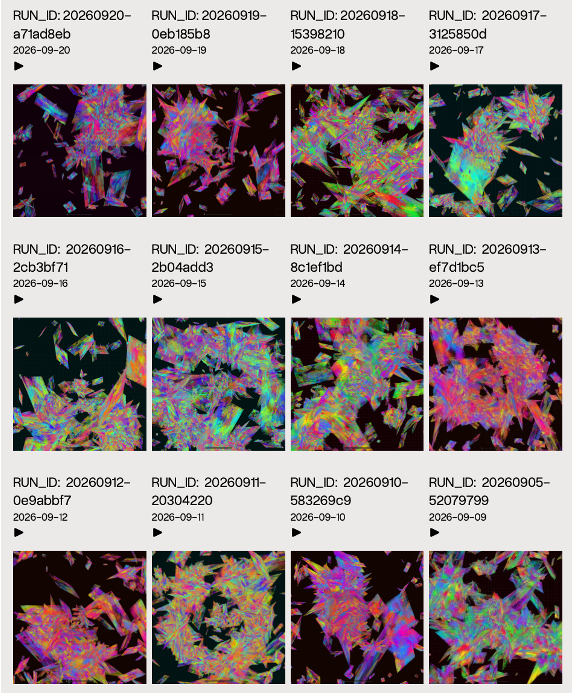
RUN_ID: 20260303-a7d1f59f
The workflow separates creative responsibilities across five AI agents—Intelligence, Strategy, Creation, Narrative, and Mandate—while combining LLM reasoning with deterministic software. AI handles interpretation and decision-making; code handles generation, state management, validation, and execution.
Inside the Creative Pipeline
The artwork is not generated in a single step. Once a topic is selected, the Creation Agent translates it into a structured visual specification defining composition, spatial relationships, and visual constraints.
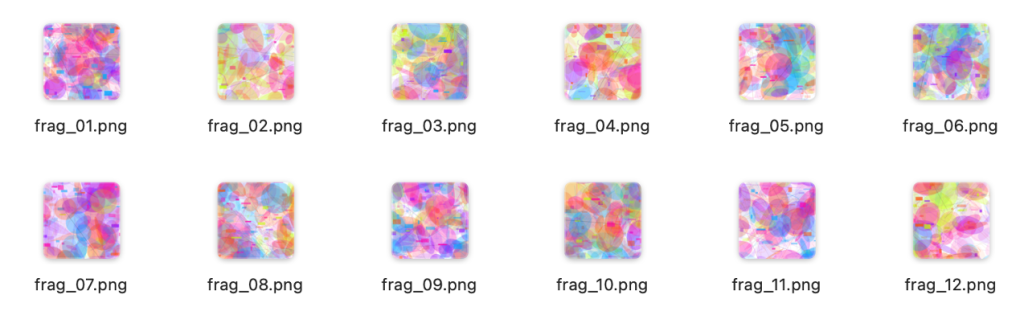
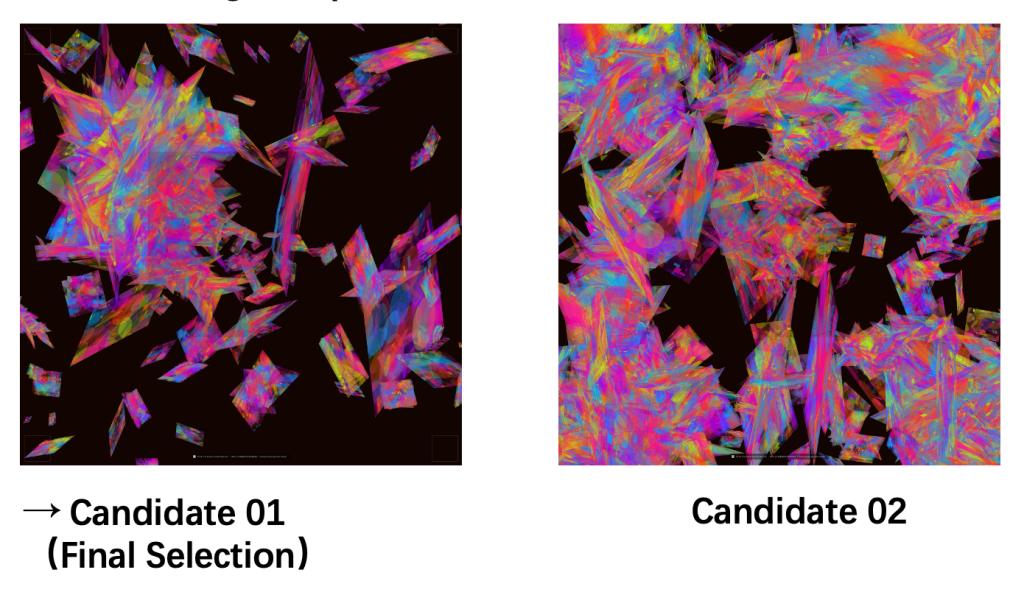
Code then turns these instructions into a set of SVG-based visual fragments, which are rendered and recomposed through a Processing-based generative system. Each run produces two candidate works under the same creative framework. The Strategy Agent then evaluates the candidates and selects the final work.Every run receives a unique ID and produces both creative assets and a traceable record of the decisions that generated them.
Example: RUN_ID: 20260919-0eb185b8
→ Topic:The Cipher and the Machine
→ Visual Specification
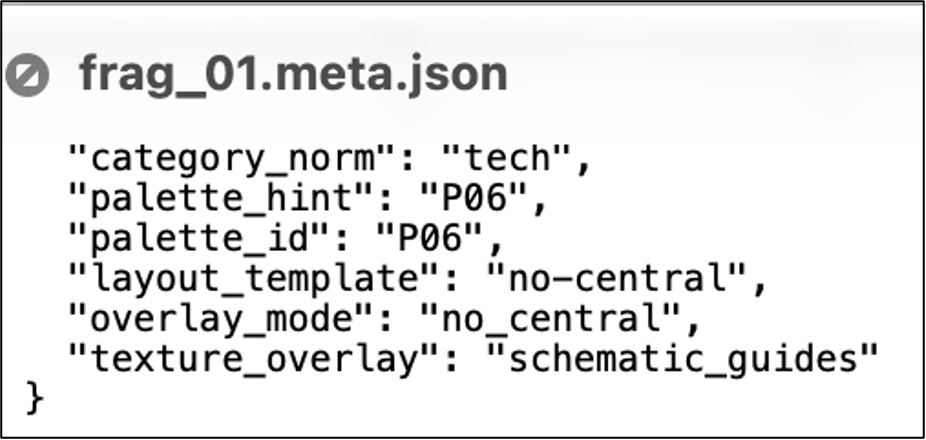
→ Fragments
→ Processing Composition
WORLD SIGNALS
↓
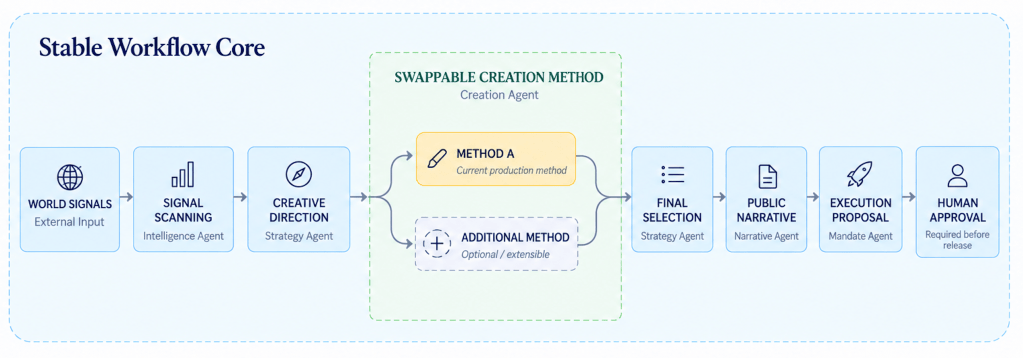
INTELLIGENCE — scans and structures signals
↓
STRATEGY — forms and selects creative directions
↓
CREATION — turns the selected direction into visual material and candidates
↓
STRATEGY — evaluates candidate outputs
↓
NARRATIVE — creates public-facing language
↓
MANDATE — prepares publishing actions
↓
HUMAN APPROVAL
Making the System Reliable and Extensible
Repeated runs exposed handoff errors between agents. I introduced a single persistent reference for each selected topic and validation gates that stop inconsistent states from moving downstream.
I also designed the workflow around a stable core with a swappable Creation layer. New visual methods can branch at the creative stage, then rejoin the same Strategy, Narrative, and human-approval pipeline.
AgentArt Studio now runs as a scheduled production system and has been operating publicly for over 200 days. Each cycle produces traceable creative assets and decisions.
What I Learned: I learned that creative AI workflows depend on more than the model: where AI makes decisions, where code takes over, what information each stage receives, and how creative intent survives translation between tools. Transparency, reproducibility, and extensibility became practical priorities.
Case 6: Neon Kalami (V1)
A Prompt-to-Song Virtual Concert
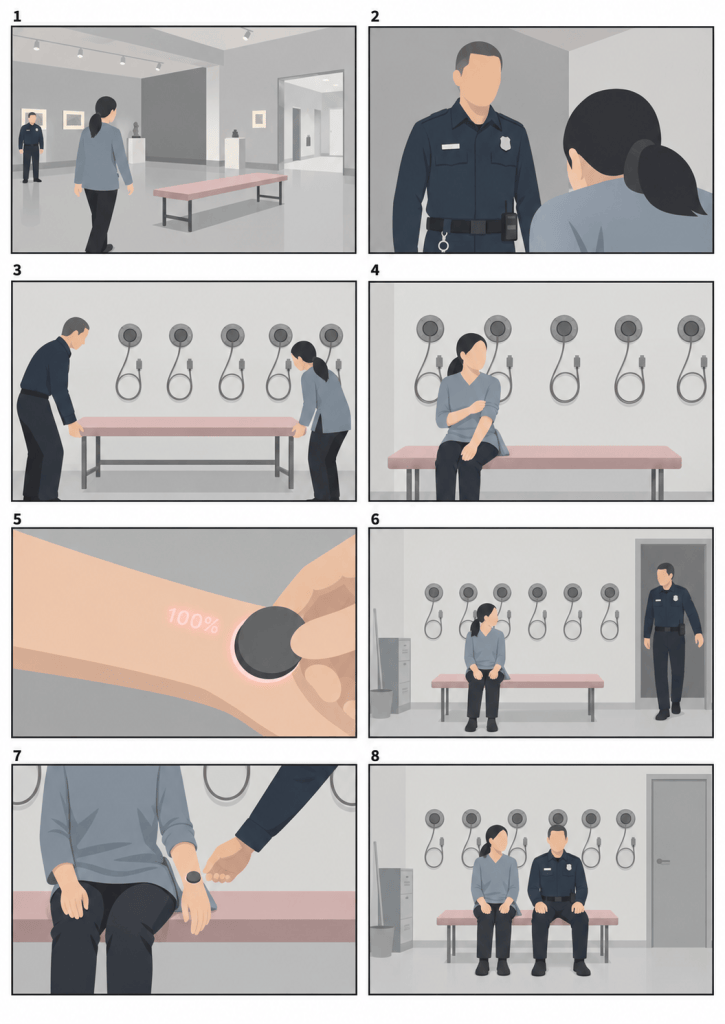
A real-time virtual concert prototype developed in Unity with ElevenLabs tools. Users enter a short song idea via text or voice, and the system generates a 60-second English song. Three anime-style virtual performers (Kali, Lumi, and Miko, collectively known as Neon Kalami) then perform the newly generated song live on stage.
The performance system includes lip sync, facial expressions, dance animation, concert-style IMAG camera direction, stage lighting, and karaoke-style synchronized lyrics. In addition, the prototype organizes generated songs by genre, supports replay via voice command or keyboard input, and offers in-editor MP4 recording.
Role: Concept Design, Interaction & Workflow Design, Unity Environment Development, AI-Assisted Programming
Prompt:A bright experimental glitch-pop track with playful female vocals, bouncy electronic percussion, tiny synthetic sound effects, chopped vocal samples, glossy digital synths, and sudden rhythmic interruptions. Cute and colorful on the surface but subtly uncanny underneath, combining cheerful hooks with strange harmonic glitches and unexpected structural shifts.
Challenge
The 60-second songs generated directly from text prompts sometimes had nearly inaudible final lyrics or stopped abruptly after the vocals. A plan-first workflow was introduced: retrieve the composition plan, remove fade-related instructions locally, add an approximately seven-second instrumental outro, and adjust section lengths to maintain the 60-second total before generating the audio. This improved the endings, although the outro’s volume and musical resolution remain only partially controllable.
Next:
-Enable users have conversations with the virtual performer.
-Let the lyrics influence the creation or behavior of the stage visuals.